
Two Ph.D. defenses highlight advances in translational neuroscience
Two PhD projects at the intersection of basic neuroscience and clinical relevance were successfully defended when Peter Brøgger and Søren-William Hardam Nohns from Center for Translational Neuroscience presented their Ph.D.-projects in April 2026
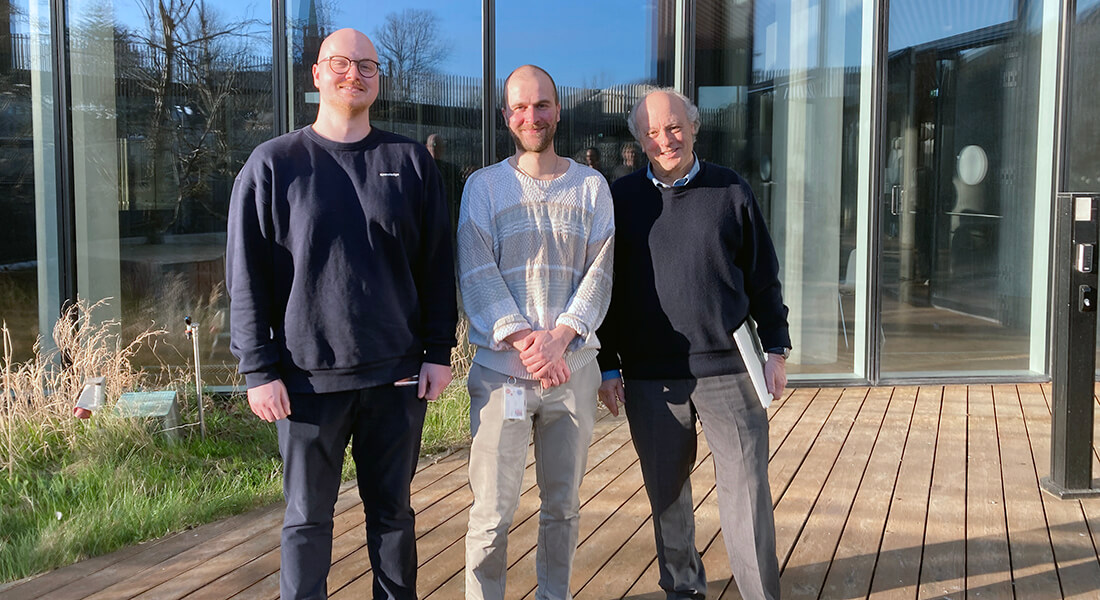
Decoding epigenetic dysregulation in Huntington’s disease
Peter Brøgger defended his PhD thesis, “Epigenetic basis of glial differentiation arrest in Huntington’s disease”, which addresses a fundamental but underexplored aspect of Huntington’s disease.
Glial support cells from patients with Huntington’s disease develop differently from similar cells in healthy individuals. They do not mature as they should, which makes them less able to support communication between nerve cells and to produce myelin - the insulating layer that is essential for efficient signaling in the brain.
By analyzing Huntington’s disease glial cells in detail, down to the level of individual cells, Brøgger found signs that their genes are more “open” than normal. This phenotype was tied to the overactivation of genetic programs that are usually only seen in immature populations during early brain formation, suggesting that diseased glia remain stuck at an early developmental stage.
Among the persistently overactivated genes, the study identifies ZNF98 as a potential upstream driver of misexpression observed in the disease glia. Notably, when ZNF98 was artificially activated in healthy glial cells, the cells began to behave more like those from patients with Huntington’s disease. This suggests that ZNF98 helps drive the disease-related changes seen in these cells.
Finally, the study showed that an enzyme called KAT6B is more active in the diseased cells. This enzyme influences how DNA is packaged inside the cell and may explain why genes are switched on incorrectly. KAT6B could therefore be an important target for future treatments of Huntington’s disease.
A step towards treating Vanishing White Matter Disease
Søren-William Hardam Nohns defended his PhD thesis, “Molecular Dissection of Intrinsic Dysfunction and Intercellular Signaling in Vanishing White Matter Disease” which found possible steps on the way towards treating Vanishing White Matter Disease.
Rare diseases that affect the brain’s myelin often strike children and can have serious consequences. One of these diseases is Vanishing White Matter Disease, which gradually damages the brain’s white matter. Children with the disease develop movement and motor difficulties, and tragically, the condition often leads to premature death. At present, there is no effective treatment.
To better understand the disease and pave the way for new therapies, Hardam Nohns has developed specialized mouse models in which the mice’s brains contain human support cells, known as glial cells, derived from human stem cells with Vanishing White Matter Disease. This makes it possible to study human-specific disease elements in a physiological context.
Using advanced analytical techniques that can examine gene activity in individual cells, the PhD project has provided entirely new insights into what goes wrong at the cellular level in this disease. This knowledge brings research an important step closer to the development of targeted treatments for these otherwise incurable childhood disorders.
Advancing CTN’s mission
The successful defenses of Peter Brøgger and Søren-William Hardam Nohns mark important contributions to the growing field of neuroscience and reinforce the role of translational research in driving future therapies for both common and rare neurological disorders.
Congratulations on the great effort to both.