
Erik Kroesbergen receives the Lundbeck Foundation Talent Prize 2026
The brain's most extensive waste clearance takes place primarily during sleep. This is the conclusion reached by Erik Kroesbergen, who identified a molecule capable of binding to a fluorescent tracer, enabling researchers to track the movement of waste products out of the brain. In recognition of this discovery and his broader research contributions, he has been awarded the Lundbeck Foundation Talent Prize 2026. Erik Kroesbergen is a PhD fellow at the Center for Translational Neuroscience (CTN).
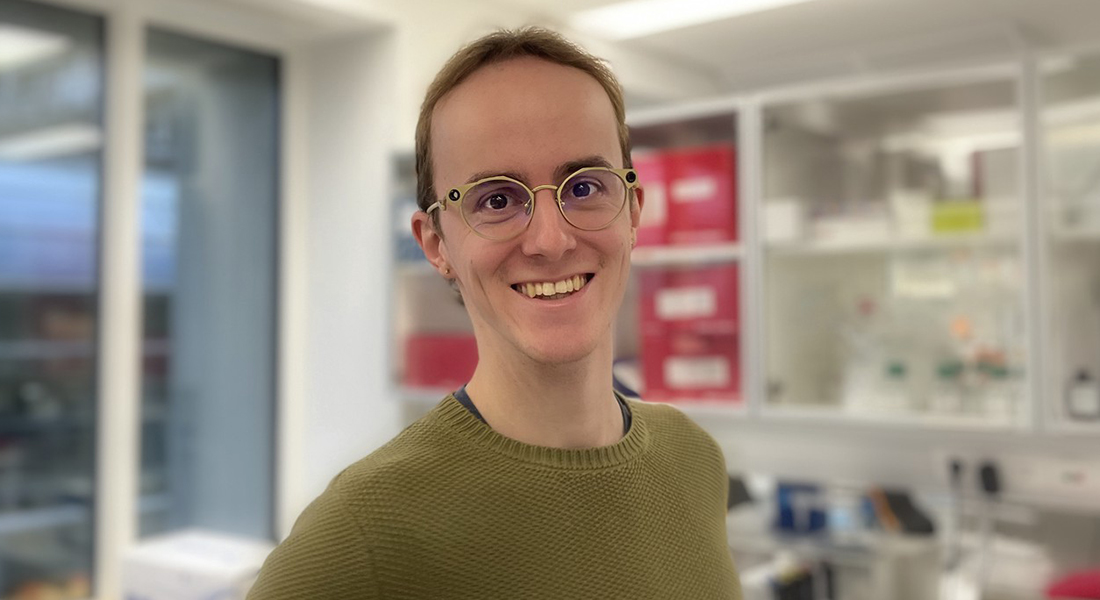
Erik Kroesbergen investigates the brain's waste clearance system, also known as the glymphatic system, with a particular focus on the accumulation and removal of metabolic waste products. This research is important because impaired clearance has been linked to neurodegenerative disorders such as Alzheimer's disease and Parkinson's disease. A better understanding of glymphatic function may help pave the way for new therapeutic strategies.
The award was a wake-up call for me, realizing the responsibility I have towards society as a scientist and that comes with receiving a grant.
For years, researchers have debated whether the brain's waste clearance system is most active during wakefulness or sleep. To address this question, Erik Kroesbergen set out to determine when waste products are removed most efficiently from the brain. Drawing on a technique originally developed in cancer research in the 1960s, he established a method for tracking the movement of waste molecules, including proteins, out of the brain. By analysing blood samples from freely moving mice, he obtained clear evidence that the brain's large-scale waste clearance occurs predominantly during sleep at night.
“I am both delighted and honoured to receive the Lundbeck Foundation Talent Prize. The award was a wake-up call for me, realizing the responsibility I have towards society as a scientist and that comes with receiving a grant. I want to make the very most of the funding and contribute something meaningful,” says Erik Kroesbergen.
As part of his plans for the award funding, Erik Kroesbergen aims to further develop a concept for low-cost 3D brain imaging technologies that could support the diagnosis and treatment of neurological disorders in low- and middle-income countries.
Link to the Lundbeck Foundations article 'He measures the brain’s nightly deep clean'.