
Brain
5 December 2025
The brain’s hidden puppeteer: How astrocytes might hold the key to treating depression
BRAIN RESEARCH
Scientists at the University of Copenhagen have discovered an intriguing mechanism that could transform the treatment of depression. Their research centers on a signaling molecule called cAMP inside astrocytes - specialized brain cells that help regulate blood flow. By understanding how cAMP influences blood vessel dilation, researchers hope to pave the way for new drugs targeting depression and other brain disorders.
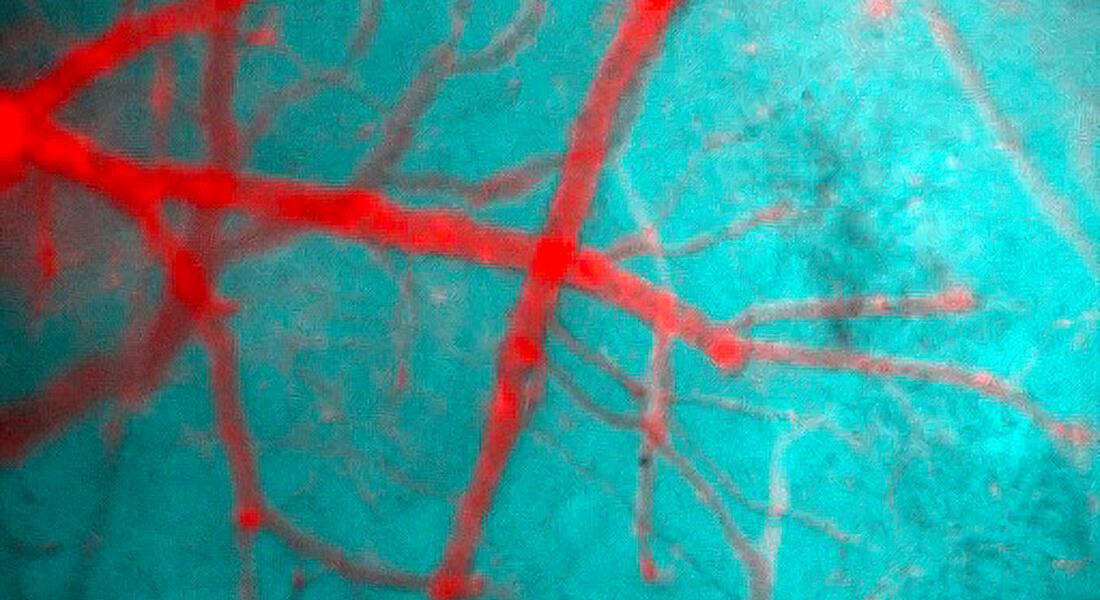
The brain’s health depends heavily on blood flow, which delivers oxygen and nutrients to active regions. When neurons fire, they demand more resources, and astrocytes respond by adjusting vessel diameter.
For years, calcium was believed to control this process. However, recent experiments tell a different story: cAMP, a signaling molecule inside astrocytes, drives vasodilation.
“This was a big shift in the field,” says Postdoc, Marta Vittani. “We showed a causal link between increased cAMP and vessel dilation.”
The research group led by Hajime Hirase at the Center for Translational Neuroscience conducted the study, revealing that cAMP plays a key role in regulating blood flow.
For decades, scientists believed calcium levels in astrocytes were the main factor in vessel dilation. But when Hirase’s team used genetically engineered mice that couldn’t increase calcium in astrocytes, blood vessels still dilated. By contrast, elevating astrocyte’s cAMP led to vessel dilation.
Article
Mice with green, fluorescent blood
A few years ago, the research group developed a method to make the blood of research mice fluorescent. This breakthrough allowed them to monitor blood vessel networks and their flow dynamics in detail, laying the foundation for these new findings.
Using fluorescent blood markers and a light-activated enzyme, we can manipulate cAMP levels and observe vessel changes in real time,”
For 25 years, the standard method was to inject dye into a mouse’s bloodstream to make the blood visible in deep tissues - a process typically required anesthesia and had only a limited duration.
With this new method, we engineered DNA to semi-permanently make blood fluorescent. We make the blood fluoresce in green or red,”
Article
Fluorescent mouse blood will help us gain knowledge about brain diseases
Astrocytes: The brain’s puppeteers
To understand how astrocytes control blood flow, imagine them as tiny “puppeteers” fine-tuning blood supply based on brain activity.
"The astrocytes are perfectly positioned to ‘listen’ to the brain’s state. Chemicals like serotonin, dopamine, and noradrenaline fluctuate with brain activity. For example, if we get startled, the brain produces noradrenaline which astrocytes detect and elevate their calcium and cAMP,” says Assistant Professor, Antonios Asiminas, a member of research group.
“Our new finding opens an avenue to study how cAMP in astrocytes plays a crucial role in blood flow changes across various brain states,” he adds.
Connecting blood flow and mental health
Building on these discoveries, Hirase’s group recently received a prestigious grant from the Independent Research Fund Denmark (DFF) to continue their studies.
“We are excited to dive deeper into how astrocytes and cAMP regulate blood flow. First, we’ll examine what happens to cAMP signals during sleep, wakefulness, and movement,” says Hirase.
Dynamic blood supply is shown to be essential for mood, cognition and sleep.
We’ll explore how blood flow changes throughout the day - during movement or rest. Different behavioral states are linked to shifts in blood flow,”
The final goal is to connect astrocytes, blood flow, and mental health. Problems with blood flow have long been associated with depression and other brain disorders.
“Depression is linked to disrupted blood flow and sleep patterns. We believe cAMP signaling in astrocytes may contribute to these changes,” says Hirase. “When cAMP signals fail, brain’s energy management including blood flow regulation breaks down.”
“Normally, blood supply adjusts to match brain activity, but in depression, this system seems to fail. We want to understand why,” Hirase continues.
Hope for new treatments
The broader perspective of this research is its potential to inspire new treatments for depression.
If the team’s hypothesis holds true, their work could shift the focus from traditional neurotransmitter-based therapies toward blood flow modulation via astrocytes.
“Our hope is that these findings lead to drugs that stabilize cAMP signaling. Such drugs could prevent cAMP breakdown, allowing it to maintain normal blood flow. That would be a milestone,” Asiminas concludes.
Contact
Professor, Hajime Hirase
hirase@sund.ku.dk
Assistant Professor, Antonios Asiminas
a.asiminas@sund.ku.dk
PostDoc, Marta Vittani
marta.vittani@sund.ku.dk
Communications Advisor
Ingeborg Auken Beck
Ingeborg.beck@adm.ku.dk