
Funding
27 January 2026
Martin Kaag Rasmussen is driven by the search for the cause of migraine and by helping patients
MIGRAINE
On 1 February 2026, Martin Kaag Rasmussen will receive a Novo Nordisk Clinical Emerging Investigator grant of DKK 11.3 million to support his research on migraine. His project aims to map the proteins that activate pain during a migraine attack. If the responsible proteins can be identified, they can potentially be blocked - preventing the development of pain.
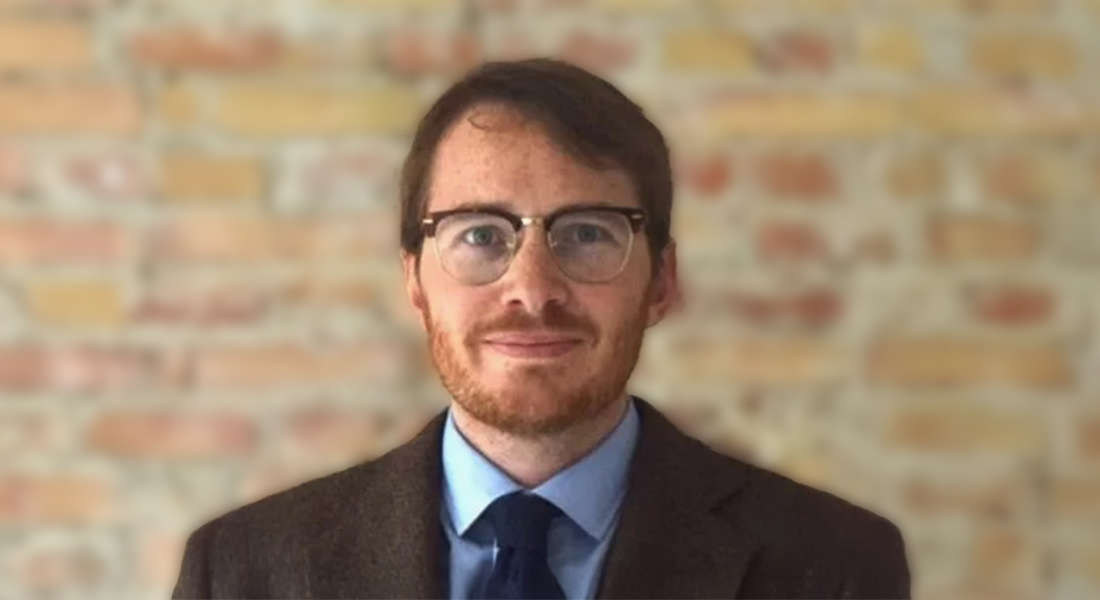
Migraine is widespread, affecting an estimated 10–15% of the Danish population. Although the past decade has brought major advances in treatment, a substantial proportion of patients -around half - still does not respond sufficiently to currently available therapies. Martin Kaag Rasmussen hopes to change this through research that investigates which signalling pathways are activated in brain cells and pain-transmitting nerves in the head when a migraine attack begins.
My biggest dream as a researcher is to contribute to the development of new medicines that work even better and help even more patients - if our work here contributes with just a small step in this process, it makes it important.
Struck by the biology of the brain
Martin Kaag Rasmussen is a trained medical doctor and has conducted research on headache and migraine at the Center for Translational Neuroscience (CTN) since 2018. The new funding from the Novo Nordisk Foundation enables him to combine his clinical training as a neurologist with his research at CTN.
He has always considered the brain the most fascinating organ in the body, and during his medical studies he completed an internship at the Danish Headache Center in Glostrup. There he became interested in the sensory nervous system and met patients with a profound need for new therapies.
“I was truly struck by the biology of the brain, and I found it extremely motivating that such a large patient group could potentially be helped,” he says.
Since then, Martin Kaag Rasmussen has worked professionally with headache and migraine, and in November 2024 he completed his PhD at CTN.
Specific proteins drive the development of migraine pain
A new chapter begins on 1 February 2026, when he receives the DKK 11.3 million Novo Nordisk Clinical Emerging Investigator grant.
The grant makes it possible for him to establish his own research group at CTN, which will focus on three major projects.
The group’s primary project, supported by the Novo Nordisk Foundation, will develop an entirely new migraine model to map in detail the specific signalling pathways activated during migraine. The aim is to identify the proteins that trigger the pain pathways in migraine. If one or more proteins can be shown to drive the development of pain, they could potentially be blocked and thereby relieve the attack.
Multiple cell types are believed to be involved in migraine: vascular cells, sensory neurons located outside the brain, and meningeal immune cells.
“Our goal is to create a map of which proteins activate which genes across different cell types. This will help us identify the molecules that drive the specific signalling pathways leading to migraine,” says Martin Kaag Rasmussen.
The overall objective is to discover new strategies for treating acute migraine attacks once the pain has already begun.
“We want to determine which proteins is responsible for the headache. Essentially, we look at which proteins keep the migraine attack going during the typical 24–48 hours it lasts,” he explains.
Knocking out the key proteins
The overall framework of the project is to block the effect of the proteins identified in the experiments, thereby preventing pain development in the mouse models. This can be done by giving an antibody targeting a specific protein or by knocking out the gene that encodes the protein, preventing its formation from the beginning.
“What we aim to achieve is that the protein loses its effect and no longer interacts with the cell type we have shown it normally interacts with,” says Martin Kaag Rasmussen.
Which method will be used depends on which proteins are identified.
Human testing is not planned within this study. However, if the research team identifies the key proteins, the next step would be to examine whether the same proteins are elevated in people experiencing migraine attacks, as in the mouse models.
Research on aura-related headache
The research group is also working on other projects, including a continuation of Martin Kaag Rasmussen’s PhD thesis on migraine aura and how it leads to headache. Aura typically occurs 5-60 minutes before headache begins and may include various neurological symptoms - most commonly visual disturbances moving across the field of vision. Other patients experience sensory symptoms, speech difficulties, or, in rare cases, temporary hemiparesis.
Martin Kaag Rasmussen’s PhD project identified an entirely new signalling pathway and 11 proteins using this pathway - none of which had previously been linked to migraine. These findings are considered groundbreaking in migraine research.
He has received a SPARK grant to continue the studies of these potentially migraine-inducing proteins. The group will test which molecules most strongly influence pain and thereby identify the most important drivers of headache development following aura.
The group’s third project concerns the headache disorder idiopathic intracranial hypertension (IIH), applying methods Martin Kaag Rasmussen developed in his PhD. For this, he has received an Early Career Clinician Scientist fellowship of DKK 2.5 million from the Lundbeck Foundation.
Read more about the project Chronic headache, ADHD, Alzheimer’s and psychosis: Young researchers at SUND receive large grants
The best place for neurological research
There can be a long way from research findings to new migraine treatments. Still, developing acute treatments for migraine attacks in humans is Martin Kaag Rasmussen’s ultimate goal. CTN is therefore the ideal environment for him, where the connection between laboratory research and clinical translation is central.
“I cannot imagine a better place to conduct my research than here at CTN. I am passionate about translational neuroscience and about helping patients,” he says.
He looks forward to building his group at CTN and advancing both his current and future research projects.
Contact
Martin Kaag Rasmussen, Postdoc
Center for Translational Neuromedicine
University of Copenhagen
martin.rasmussen@sund.ku.dk
Ingeborg Auken Beck
Communications Advisor
Ingeborg.beck@adm.ku.dk